Global Environmental Lessons: How China's Massive Tree-Planting Affects Climate and Resources
A massive tree-planting program in China has altered the regional climate, but it has also triggered serious concerns regarding water resources and ecosystems.
 💡Tech
Photo: UNIAN
Key points
- China planted 66 billion trees to combat desertification
- Country's forest cover increased from 10% to over 25%
- Project resulted in lower CO2 concentrations and increased rainfall
- Initiative threatens to deplete underground water reserves
For nearly half a century, China has been implementing a massive environmental initiative aimed at curbing the spread of deserts. Launched in the late 1970s, the project established vast forest belts around the Taklamakan Desert. These efforts have successfully increased the country's forest cover from 10% to over 25%.
Climatic Consequences of the Experiment and Water Scarcity
To combat the shifting sands, specialists utilized drought-resistant plant species while employing modern technology and drones for irrigation and seeding. Satellite data gathered over the past decades show that the artificial forests have begun absorbing more carbon dioxide, reducing its local concentration during the rainy season. Furthermore, researchers recorded a doubling of summer rainfall, which is attributed to localized microclimate shifts.
At the same time, researchers point out significant risks associated with such profound ecological intervention. The primary concern is the heavy strain placed on the region's limited water resources. Continuously irrigating billions of trees depletes underground water reserves, with some projections warning they could be severely exhausted by the end of the 21st century. Additionally, the drastic transformation of desert landscapes threatens the natural habitats of local insects, reptiles, and migratory birds.
Source UNIAN — unian.ua/ecology/za-50-rokiv-posadili-milyardi-derev-chim-zakinchiv… ↗
Read next
 🛡️Security
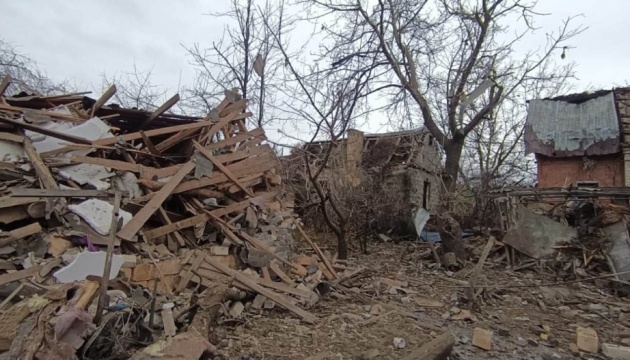
Airstrike on Myrne: Elderly couple injured
Russian forces launched an airstrike on the village of Myrne in the Donetsk region, causing significant property damage and civilian casualties.
 🛡️Security
Putin downplays Kerch Bridge damage following Ukrainian strikes
The Russian leader addressed the consequences of strikes on the Crimean bridge, attempting to minimize the scale of destruction and deny its military use.
 💼Economy
Office Work During Blackouts: How Ukrainian Businesses Are Adapting to Crisis Conditions
Recommendations for Ukrainian companies on organizing work processes amid power outages and difficult winter challenges.
 🇺🇦Ukraine
Kremlin Says EU Representatives Invited to Moscow to Discuss War in Ukraine
Russian ruler Vladimir Putin announced a proposal for European Union representatives to visit Moscow to clarify their stance on settling the war in Ukraine.
 🇺🇦Ukraine
Russian Leadership Statements Following Anchorage Summit: International Talks Overview
Following a trilateral meeting involving world leaders, the Russian side voiced several statements regarding the resolution of the conflict in Ukraine.
 🛡️Security
Explosion in a Residential House in Lozova Leaves One Injured
An elderly man was hospitalized following an explosion of an unknown device inside a private residence in Lozova.